Slate Roofs: History, Pros and Cons, Lifespan, Maintenance and Repair
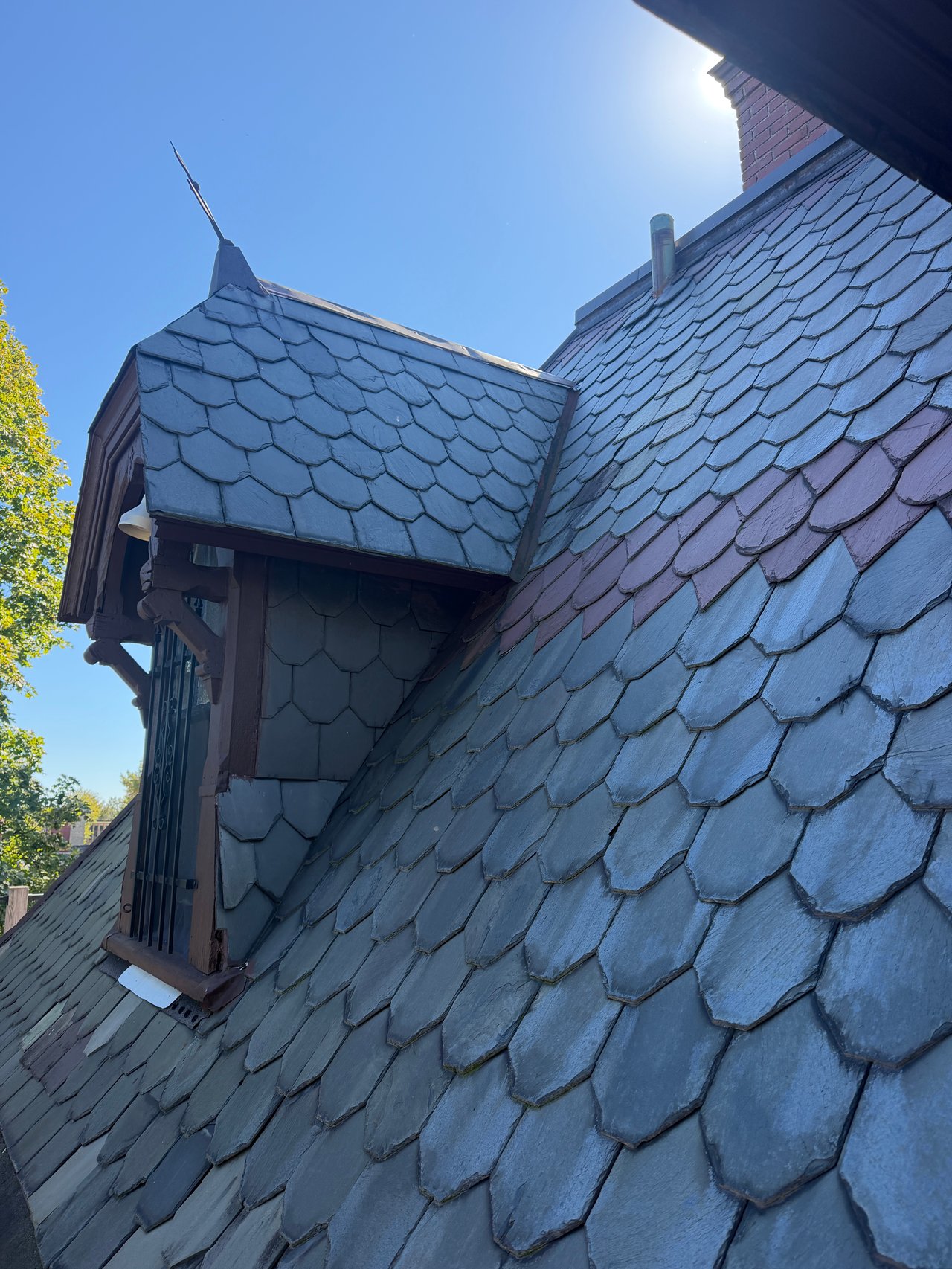
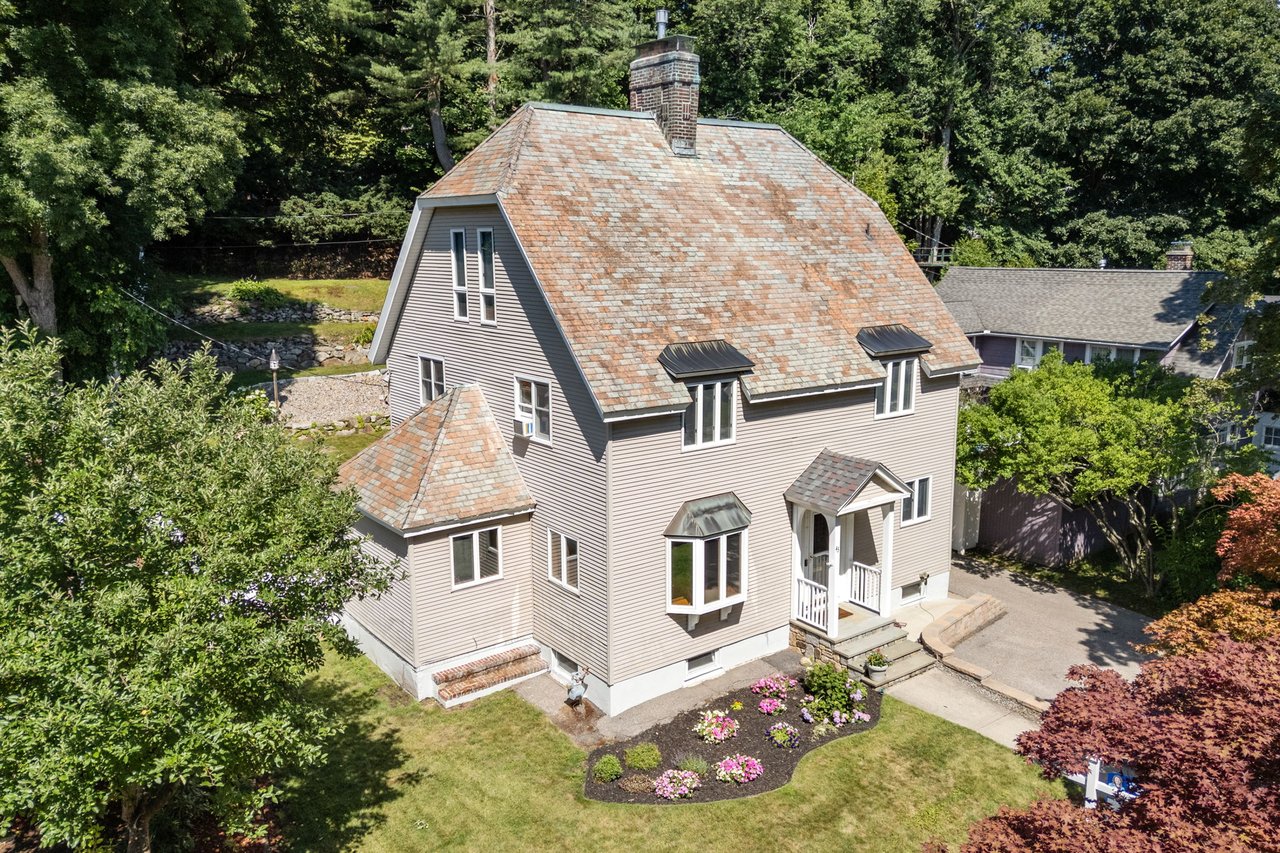
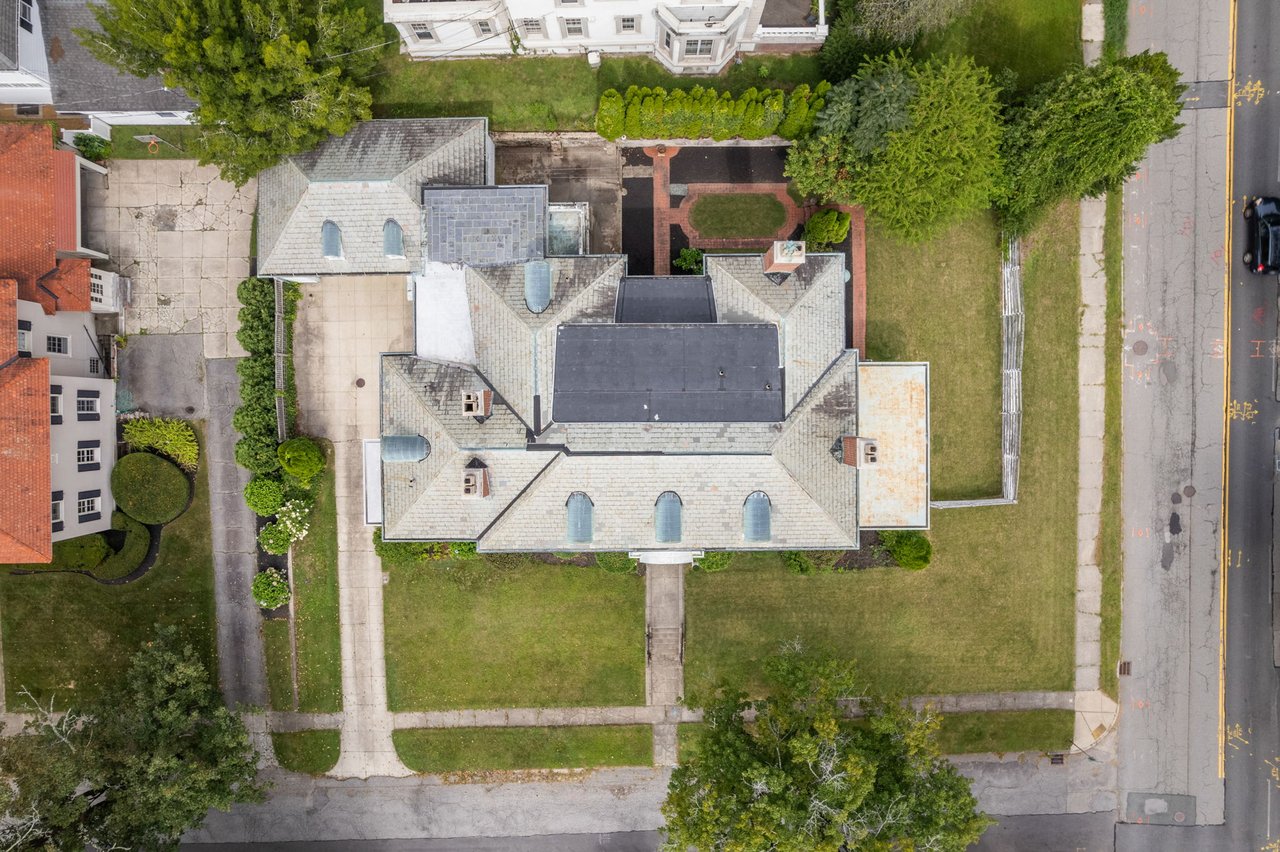
I'm currently representing 3 properties in Worcester, MA with slate roofs - 2 Military Rd, 43 Laconia Rd, and 8 Claremont St Unit 3A. Slate roofs are not completely uncommon in Worcester, but they're not the norm, either. Faced with buyer questions than I had the answers to, I decided to dig into more information about slate roofs.
What Is a Slate Roof? The Quick Answer
A slate roof is made of thin, hand-split tiles of natural metamorphic rock, and it is one of the longest-lasting roof coverings available. The National Park Service says properly installed slate lasts 60 to 125 years or longer, depending on the type of slate, the roof's design and the climate, and some slate has lasted more than 200 years (NPS Preservation Brief 29). The trade-offs are weight, a high upfront cost and a small pool of roofers who know how to work with it.
- Lifespan: 60 to 125+ years for most U.S. slate; some types last 175 to 200+ years.
- Weight: roughly 500 to 1,400 pounds per 100 square feet, according to the National Slate Association. Older homes built for slate usually have the framing for it; other homes may need an engineer's review.
- Upkeep: an annual look from the ground, gutter cleaning, a professional inspection every 5 to 7 years, and prompt repair of broken slates.
- Cost: consumer cost guides put installed natural slate at about $10 to $30 per square foot, versus about $3 to $8 for asphalt shingles (HomeAdvisor).
- Best for: historic homes, long-term owners and buyers who value a roof that can outlast the house's other systems.
The History of Slate Roofing
Slate has covered buildings for about two thousand years, and it reached North America with the earliest colonists. Welsh slate heritage sources trace split roofing slates to the Roman occupation of Britain, with Welsh slate shipped around Britain and into the Low Countries by the 13th century (Welsh Slate).
Colonial America. Archeologists at Jamestown, Virginia, have unearthed roofing slate in layers dated to 1625 to 1670. Slate roofs were introduced in Boston as early as 1654 and in Philadelphia in 1699, and 17th-century building ordinances in New York and Boston recommended slate or tile roofs for fireproof construction. In those early years nearly all roofing slate was imported from North Wales (NPS Preservation Brief 29).
The first U.S. quarries. The first commercial American slate quarry opened in 1785 at Peach Bottom Township, Pennsylvania. Production stayed local until the mid-19th century, when a growing population, better quarrying technology and the spread of the railroads opened new markets. Welsh immigrant slate workers and architectural pattern books helped the industry mature.
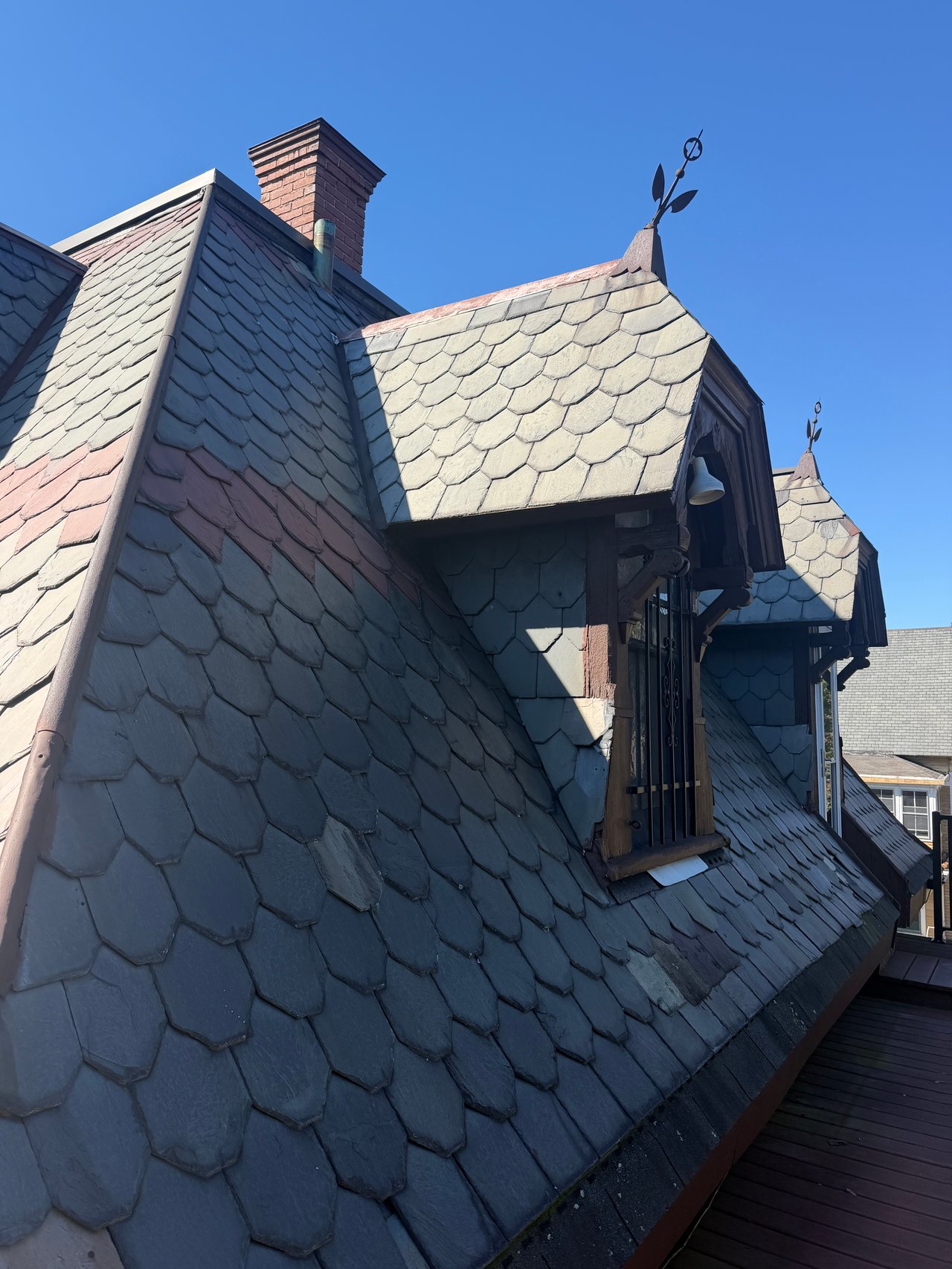
The boom. After the Civil War, quarries opened in Vermont, New York, Virginia and Pennsylvania's Lehigh and Northampton Counties. By 1876 the U.S. had become a net exporter of roofing slate. In 1899 more than 200 quarries were working in 13 states, with Pennsylvania the largest producer, and output peaked between 1897 and 1914. Victorian styles such as Second Empire (with its Mansard roofs), Gothic Revival and Queen Anne, which put roofs on show, were ideal for slate laid in patterns and colors.
Decline and revival. The industry began to shrink around 1915, as skilled labor became scarcer and mass-produced asphalt shingles could be made, shipped and installed more cheaply. The National Park Service notes that interest has picked up again with the rise of historic preservation and renewed recognition of slate's durability. The National Slate Association, formed in 1922 and now made up of architects, consultants, contractors, distributors and quarriers, works to keep slate on roofs and to share technical standards (National Slate Association).
Where Are Slate Roofs Most Common?
Slate roofs are most common where slate is quarried and where 19th-century building booms met good rail and shipping links. Slate only forms in certain mountain regions, because it takes the heat and pressure of mountain building to turn clay-rich sediment into rock that splits cleanly.
The northeastern United States. The most important U.S. deposits lie in the Mid-Atlantic and Northeastern states along the Appalachian Mountains, according to the National Park Service. Each district has its own character:
- Vermont and New York: green, purple, red and mottled slate. The Granville, New York area holds one of the few commercial deposits of red slate in the world. Vermont's Fair Haven quarry opened in 1839 (CUPA Pizarras).
- Pennsylvania: gray-black slate from Lehigh and Northampton Counties, plus the historic Peach Bottom district.
- Maine and Virginia: deep blue-black slate; Virginia slate is known for a lustrous look from its mica content.
The NPS also notes that slate roofs turn up on nearly every class of building, but most often on institutional, church and government buildings, where longevity matters most, and on farm buildings near the quarries. Boston has had slate roofs since the 1650s, so older New England neighborhoods are a natural place to find them.
Wales and the United Kingdom. North Wales was the world's slate powerhouse in the 19th century. Penrhyn Quarry became the world's largest, selling more than 100,000 tons a year and employing over 3,000 people at its peak in the 1870s (Welsh Slate).
Spain and continental Europe. Today Spain is the leading roofing slate producer. A geologist writing for the producer CUPA Pizarras points to the Truchas Syncline in northwest Spain as the world's largest roofing slate outcrop (CUPA Pizarras), and Spain supplies roughly 90 percent of the natural slate used for roofing in Europe (Wikipedia: Slate industry). When the Park Service wrote its brief in 1993, slate from China, Africa and Spain was just starting to arrive, mainly on the West Coast, and it cautioned that imported slates often do not match the colors and textures of U.S. slate, which matters for historic repairs.
What Are the Pros of a Slate Roof?
The biggest advantages of slate are its longevity, its resistance to weather and fire, and its look. Each of these is backed by roofing and preservation experts.
- Exceptional lifespan. The National Park Service calls slate one of the most durable and attractive roofing materials, with a typical life of 60 to 125 years or more (NPS).
- Weather resistance. Slate is made of stable minerals that resist weathering, with low porosity and low water absorption. That limits frost damage, which is why it suits cold climates (NPS). Atmospheric acids cause only negligible deterioration.
- Fire resistance. Slate is stone and does not burn. Colonial-era ordinances in New York and Boston recommended slate or tile roofs for exactly this reason. Roof coverings are fire-tested under ASTM E108 (National Slate Association).
- Repairable by design. A damaged slate can be slid out with a tool called a ripper and a matching slate slipped in, so most repairs do not require re-roofing. The Slate Roofing Contractors Association describes repair as a relatively straightforward process.
- Beauty and variety. Slate comes in gray, blue-gray, black, green, purple, red and mottled colors, and can be laid in standard, textural or graduated patterns that give a roof real architectural character (NPS).
- Long-run value. Because a natural slate roof can outlast several roofs of other materials, the NPS argues that natural slate tends to be the better long-term investment, even though a synthetic slate roof costs only marginally less to install.
- Historic fit. Slate is often a defining feature of period homes. Historic district guidelines commonly favor repairing existing slate over replacing it; Alexandria, Virginia's design guidelines are one example, and they cite the Park Service brief.
What Are the Cons of a Slate Roof?
The main drawbacks of slate are its weight, its cost and the specialized skill it takes to install and repair. None of them is a reason to avoid slate, but each should be weighed before buying, replacing or repairing.
- Weight. The National Slate Association puts slate at 500 to 1,400 pounds per square (100 square feet), depending on thickness and size (Professional Roofing). The Slate Roofing Contractors Association advises that a structural engineer evaluate the framing of any building that never had a slate roof (RoofersCoffeeShop).
- Cost. Consumer cost guides put installed natural slate at about $10 to $30 per square foot, compared with $3 to $8 for asphalt shingles (HomeAdvisor). Tear-off of an old roof, flashings and framing work add to the total.
- Few qualified roofers. The Park Service blames a decline in skilled labor as one reason slate lost market share after 1915, and the National Slate Association acknowledges there are fewer slate roofers than 25 years ago, though it maintains a directory of contractors by state (RoofersCoffeeShop).
- Fragile underfoot. Slate breaks under foot traffic, falling branches and heavy snow and ice loads (NSA). Chimney sweeps, painters and anyone else who walks on the roof can do damage.
- Parts that wear out before the slate. Flashings are the weakest point of any roof, and steel nails can rust through long before the slate does. A slate roof with plain steel or galvanized nails may fail early (NPS).
- Long lead times and matching problems. Slate delivery can take 4 to 12 weeks, or up to a year for special orders. Some historic types, such as ribbon slate, are no longer quarried.
- Not forever. The National Slate Association says slate can last up to 200 years but will eventually deteriorate, and quality, slope, climate and installation all affect the result (RoofersCoffeeShop).
How Long Does a Slate Roof Last?
Most slate roofs last 60 to 125 years, and the best types have lasted 175 to 200 years or more. The range is wide because lifespan depends on the kind of slate, how it was fabricated and installed, and how well the roof has been maintained (NPS Preservation Brief 29).
The Park Service gives these figures as a general guide to whether an existing roof is nearing the end of its life, not as guarantees:
Slate type | Typical service life |
|---|---|
Peach Bottom, Pennsylvania (not being quarried in 1993) | At least 200 years |
Buckingham, Virginia | 175 years or more |
Vermont and New York | About 125 years |
Pennsylvania Hard-Vein (not being quarried in 1993) | About 100 years |
Pennsylvania Soft-Vein | More than 60 years |
A few factors move a roof up or down that range:
- Slate quality. Slate with low calcite content and low porosity weathers more slowly. Weathering happens when calcite and iron sulfide impurities react with moisture and temperature swings to form gypsum, which pushes the layers of the slate apart (delamination).
- Pitch. Steeper roofs shed water faster and last longer. Spires and steep Mansard slopes often keep their original slate after other roof areas have been replaced.
- Problem zones. Eaves, valleys and other areas with concentrated water flow or ice damming wear out faster.
- Fasteners and flashings. Copper or stainless steel nails and heavy-gauge copper flashings keep pace with the slate. Plain steel nails and thin flashings do not.
- Maintenance and repair quality. Poor repairs, such as roofing cement or mastic smeared over cracks, can shorten a roof's life.
Slate is also graded. ASTM C406, the standard specification for roofing slate, sorts slate into grades S1, S2 and S3, with S1 having the longest expected life and the lowest water absorption (study-guide summary of ASTM C406). Ask a contractor which grade, and which quarry, a roof uses or would use.
How Do You Maintain a Slate Roof?
A slate roof needs a simple routine: inspect it every year and after severe storms, keep gutters clear, and fix small problems quickly. Slate is low-maintenance, not maintenance-free. The National Slate Association lists "no maintenance required" among the common myths about slate, and notes that how much care a roof needs depends on its age and location (RoofersCoffeeShop, summarizing NSA Technical Bulletin 9).
The National Park Service's recommended routine (Preservation Brief 29):
Task | How often | What to look for |
|---|---|---|
Inspect from the ground with binoculars (or from a lift) | Every year and after severe storms | Cracked, broken, misaligned or missing slates; delamination; flashing pinholes or open seams; broken or clogged downspouts |
Clean gutters | Twice in fall and once in early spring | Debris that backs up water at the eaves |
Check the attic | With each inspection | Water stains and rot on rafters and sheathing, especially near the roof plate, valleys and hips |
Professional inspection | Every 5 to 7 years | A roofer experienced with slate and steep slopes |
Replace damaged slates | Promptly | Delays let water reach sheathing and framing |
Keep a roof log | Ongoing | Dates, repairs, bills and spare slate samples |
Stay off the roof. The Park Service recommends keeping foot traffic to a minimum. When someone must walk on slate, such as a chimney sweep or painter, it suggests hooking ladders over the ridge and working from them to spread the weight. If walking on slates is unavoidable, wear soft-soled shoes and step on the lower-middle of the exposed part of the slate.
Watch the water. Ice dams in gutters, valleys and around chimneys can damage individual slates, and eaves and valleys wear out first. In snowy regions, snow guards help prevent dangerous slides of snow and ice from the roof.
Do not panic over slate "fines." Small bits of slate dust or debris that show up in gutters in the first months are common, and the National Slate Association says rain will wash them away. They are not a sign of poor-quality slate.
Do not assume the slate is leaking. The Park Service points out that gutters, valleys and flashings are more likely culprits, and that what looks like a leak can be condensation from poor attic ventilation.
How Are Slate Roofs Repaired?
A broken slate is repaired by pulling out its nails with a slate ripper, sliding out the damaged piece, and fastening a matching slate in its place with a metal hook, strap or copper bib that keeps the repair watertight. The work is simple in principle but easy to get wrong, and both the National Slate Association and the National Park Service say it belongs with experienced slaters (NSA; NPS).
Why slates need repair. The NSA lists foot traffic, fallen limbs, heavy snow and ice loads, stress cracks from quarrying and installation, and defects in the slate itself. Slates are also lifted and reset when flashing or underlayment must be replaced.
The basic repair, step by step:
- Remove the damaged slate. Hook the ripper onto a nail under the broken slate, pull or cut the nail, and repeat for each nail until the slate slides out. Clear leftover fragments and nail shanks.
- Choose a matching slate. The replacement should match the original's quarry type, color, weathering characteristics (unfading, weathering or semi-weathering), size, shape and texture. Size matters most: a slate that is too short compromises headlap and weathertightness. Reclaimed slate of similar age is often the best match.
- Fasten it with durable metal. Copper nails, slate hooks, bibs and straps are the standard tools; lead-coated copper and stainless steel are also common. Galvanized steel eventually rusts and can stain the slate. The goal is fasteners that outlast the slate.
- Seal the nail hole the right way. In the traditional method, a piece of copper roughly 3 inches by 8 inches slides under the joint above to cover the new nail. Metal hooks and straps that fold over the tail of the slate are alternatives. The NPS warns that copper tabs can fold over in northern climates where snow and ice build up, letting the new slate slide out.
What not to do. Do not smear roofing mastic or sealant on cracked slate. The NPS says it hardens and cracks over time, lets water in, makes future repairs harder, and speeds corrosion when applied to metal flashings.
Check the sheathing and flashing. When many slates are removed, inspect the wood sheathing for rot and projecting nails. The NPS advises replacing deteriorated boards with solid wood of similar thickness rather than plywood, whose rigidity can loosen neighboring slates, and avoiding pressure-treated lumber, which can shrink. Use one type of metal for flashings, gutters and downspouts to avoid galvanic corrosion, and use copper flashing of at least 16 ounces (heavier in valleys and gutters). Because slate outlasts its flashings, a pinhole in the metal is often the real source of a leak.
Repair or replace? The NPS gives a rule of thumb: if 20 percent or more of the slates on a roof or roof slope are broken, cracked, missing or sliding, replacing the roof is usually cheaper than piecemeal repair, especially on an older roof. Before deciding, rule out isolated damage, failed flashings, leaky gutters and attic condensation. If slates are sliding out but still sound, rusting nails are likely the cause, and the slates can often be salvaged and re-laid with copper or stainless nails. Replacement can also be done one slope at a time to spread the cost.
After a storm. If a storm blows off many slates, the NPS recommends a temporary covering right away, such as stitched-in roll roofing, to protect the interior while materials are ordered.
Hiring a slater. Ask for slate-specific experience and references, and check the National Slate Association member directory or the Slate Roofing Contractors Association. The Slate Roofing Contractors Association notes that damaged slates can be replaced easily with a ripper and a matching slate when the work is done correctly (RoofersCoffeeShop).
Slate Roof FAQs
How long does a slate roof last?
Most slate roofs last 60 to 125 years, and the longest-lived types have lasted 175 to 200 years or more. Lifespan depends on the quarry, the installation and how well the roof is maintained.
Are slate roofs worth the money?
Often, over a long time horizon. Slate costs several times more than asphalt up front, but a single slate roof can outlast several roofs of other materials, and the National Park Service calls natural slate the better long-term investment. The case is strongest for historic homes and owners who plan to stay.
Do slate roofs require maintenance?
Yes, though not much. Plan on a ground-level inspection each year and after severe storms, gutter cleaning in fall and spring, a professional inspection every 5 to 7 years, and prompt replacement of broken slates.
How much does a slate roof cost?
Consumer cost guides put natural slate at about $10 to $30 per square foot installed, or roughly $1,000 to $3,000 per square, compared with $3 to $8 per square foot for asphalt shingles. Your price depends on the slate grade, roof complexity, flashings and any framing work.
How heavy is a slate roof?
The National Slate Association puts natural slate at roughly 500 to 1,400 pounds per 100 square feet. If a house was not built for slate, a structural engineer should check the framing first.
Can you walk on a slate roof?
It is best not to. Slate can crack under foot traffic. If access is needed, use ladders hooked over the ridge to spread the weight, wear soft-soled shoes and step on the lower-middle of the exposed slate.
Can a slate roof be repaired, or does it have to be replaced?
Usually it can be repaired. Individual broken slates are replaced with matching slates and copper, stainless or similar durable fasteners. The Park Service suggests that replacement becomes the cheaper option when about 20 percent or more of the slates on a roof or slope are failing.
Why are slates sliding out of my roof?
Often the nails have rusted, not the slate. Roofs laid with plain steel or galvanized nails can lose slates while the stone is still sound. A slater can often salvage the slates and re-lay them with copper or stainless nails.
Where does roofing slate come from?
In the U.S., mostly from the Appalachian belt in Vermont, New York, Pennsylvania, Maine and Virginia. Worldwide, major sources are Wales and, today, Spain, which supplies most of Europe's roofing slate.
Is synthetic slate a good substitute?
It is lighter and cheaper, but the NPS does not recommend artificial slate for historic restoration, notes that total installed cost is only marginally lower once labor, flashing and tear-off are counted, and points out that several artificial roofs may be needed over the life of one natural slate roof.
Sources
Expert and institutional sources (preservation, trade association, roofing industry):
- The Repair, Replacement, and Maintenance of Historic Slate Roofs, Preservation Brief 29, Jeffrey S. Levine, National Park Service Technical Preservation Services (1993)
- Slate Roof Repair & Care, National Slate Association
- Debunking the Myths About Slate Roofing, RoofersCoffeeShop, summarizing National Slate Association Technical Bulletin 9
- Debunking the Myths of Slate Roofing, RoofersCoffeeShop, summarizing guidance from the Slate Roofing Contractors Association
- Slate association takes issue with installation article, Professional Roofing (National Roofing Contractors Association), letter from the National Slate Association
- National Slate Association (about the association)
- Summary of ASTM C406 slate grades, roofing contractor exam study guide
History and prevalence:
- Welsh Slate Heritage, Welsh Slate
- Brief history of roofing slate in Northern America and Natural slate, CUPA Pizarras (slate producer)
- Slate industry, Wikipedia
Cost:
- How Much Does It Cost to Install a Slate Roof?, HomeAdvisor. Prices vary by region, slate grade and roof complexity; get local quotes.
Historic preservation policy example:
- City of Alexandria, VA design guidelines on slate roofs, citing Preservation Brief 29