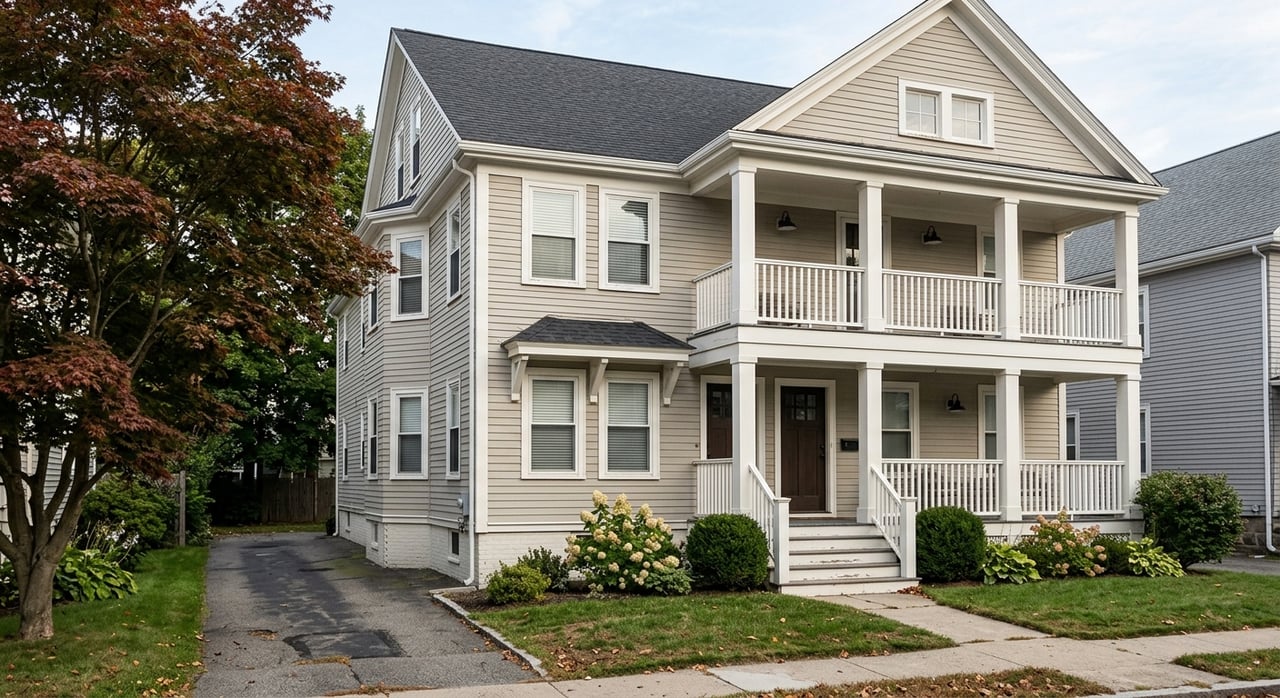
If you have been eyeing a Worcester multifamily home, you have probably noticed that the numbers only tell part of the story. In this market, local investors are not just looking at price tags. They are weighing rent potential, condition, compliance, and future resale in a city with older housing stock and strong rental demand. This guide will walk you through what experienced Worcester buyers tend to focus on so you can evaluate opportunities with more confidence. Let’s dive in.
Worcester market context
Worcester has a renter-heavy housing profile, which helps explain why multifamily homes stay on so many buyers’ radar. According to Census QuickFacts for Worcester, the owner-occupied housing unit rate is 42.8%, median gross rent is $1,487, and the median value of owner-occupied homes is $374,400. The same source also lists a median multifamily house price of $475,000.
At the same time, Worcester is still adding housing. The city was named a 2025 Housing Choice Community after producing 2,133 net new housing units, and it adopted a Housing Production Plan in 2025. For investors and owner-occupants, that points to a market where housing supply is growing, but rental demand remains an important part of the local picture.
Why investors like Worcester multifamily homes
Local investors often like Worcester multifamily properties because they can offer more than one path to value. A two-family or three-family home may create income from multiple units, provide owner-occupant flexibility, or appeal to a future buyer looking for the same setup.
Worcester also has a large stock of traditional small multifamily properties, especially triple-deckers. The city’s housing planning documents note that much of this stock is older and often needs updates, which means buyers are often balancing income potential against renovation scope. In other words, a property may look attractive on paper, but the true opportunity depends on how much work it needs.
Rent potential matters, but so do the sources
One of the first things local investors check is realistic rent potential by unit type. In Worcester, two- and three-bedroom units are especially important. The city’s Quick Facts page lists median rents of $1,450 for two-bedroom units and $1,804 for three-bedroom units.
Other public benchmarks are higher. Apartments.com reports March 2026 average rents of $1,845 citywide, $2,150 for two-bedrooms, and $2,331 for three-bedrooms, while MassHousing FY2026 rent limits for Western Worcester County list $1,532 for two-bedrooms and $2,131 for three-bedrooms. Because these figures vary, smart buyers usually compare multiple sources instead of relying on one headline number.
What that means for your analysis
If you are evaluating a property, conservative underwriting is usually the safer move. Many local buyers compare current in-place rents, recent live comps, city rent medians, and benchmark rent limits before deciding whether the deal still works.
That approach helps you avoid overestimating cash flow. It also gives you a clearer picture of whether a property’s upside comes from improved condition, better unit layouts, or simply stronger management.
Condition can change the whole deal
In Worcester, condition is often just as important as rent. The city’s draft Housing Production Plan says 59% of housing units were built before 1960, and Worcester’s Housing Now Initiative notes that much of the neighborhood multifamily stock is made up of triple-deckers that are more than 100 years old. Many carry deferred maintenance.
That is why experienced buyers look closely at major systems, not just kitchens and paint. Roof age, heating systems, electrical updates, windows, plumbing, porches, and foundation issues can all affect your budget and timeline. A building that appears affordable upfront may require substantial work soon after closing.
Lead paint and code issues
Older buildings can also bring compliance costs. Worcester notes that Massachusetts law requires abatement of lead paint hazards wherever children under six reside, which can materially affect rehab budgets in older multifamily homes. The city also points to sanitary, building, and fire code work as common needs in aging small multifamily properties.
For that reason, local investors often ask early questions about known violations, past repairs, and whether major safety upgrades have already been completed. This does not guarantee future costs, but it can help you spot red flags before you get too far into the process.
Operating costs are part of the investment
A property’s purchase price is only one part of the math. Worcester investors also pay attention to recurring costs that affect monthly performance and long-term hold strategy.
The city’s FY2026 tax page lists a residential property tax rate of $13.28 per $1,000 of assessed value. The same source notes that late payments accrue 14% annual interest after the 30-day window, which is another reminder that carrying costs need to be planned carefully.
Utilities, water, sewer, and trash
Utilities can make a meaningful difference in older multifamily buildings, especially when systems are shared or not separately metered. Worcester’s Quick Facts page lists a current water rate of $3.85 per hundred cubic feet and a sewer rate of $9.49 per hundred cubic feet.
Trash costs matter too. Worcester uses a pay-as-you-throw trash system, with small yellow bags priced at $1.00 and large bags at $1.75. That may not make or break a deal on its own, but investors often include these smaller recurring expenses when comparing one property to another.
Compliance is no longer optional to ignore
Local investors are also paying closer attention to rental compliance. Worcester launched a Rental Registry Program in March 2024 and says the city has about 50,000 rental dwellings. Rental units must be registered annually, with a $15 per unit registration fee and a $5 per unit renewal fee.
The registry supports enforcement of sanitary, fire, and building code compliance. For buyers, that means due diligence should include understanding not only what a property earns, but also what it will require to operate legally and smoothly after closing.
Layout and unit mix still matter
Because Worcester has a large renter base, small differences in layout and condition can affect how a unit performs. The public data suggests that two- and three-bedroom units sit in the key local rent bands, so buyers often pay close attention to room count, functional layouts, and whether the units feel competitive for today’s renter expectations.
A dated but well-laid-out three-bedroom may draw stronger interest than a poorly configured unit with cosmetic updates. Local investors often ask whether a property’s current layout supports stable leasing without requiring major reconfiguration.
Legal use and zoning affect resale
Strong investors do not just think about purchase and renovation. They also think about exit strategy. In Worcester, resale value often depends on legal use, building condition, and how large the future buyer pool may be.
The city’s housing needs assessment notes that the zoning ordinance regulates multifamily housing by height and density. That is why buyers should verify zoning, legal nonconforming status, and any future expansion assumptions before counting on added value.
Older homes need extra verification
This point is especially important in older two-family and three-family homes. The building you see today may not line up neatly with current code expectations or the use a buyer assumes is allowed.
Before you build your financial plan around finishing space, adding units, or expanding, it is worth checking what is legally recognized. A property with clear legal status and fewer question marks is often easier to finance, manage, and resell.
Owner-occupants may see added flexibility
Not every multifamily buyer is a pure investor. In Worcester, some buyers plan to live in one unit and rent out the others. For those owner-occupants, Worcester’s ADU rules may add flexibility on some lawfully existing single-, two-, or three-family homes, with owner occupancy required.
That will not apply to every property or every strategy, but it is one more example of why local rules can shape how buyers think about long-term value. A good opportunity is not always the one with the lowest asking price. Sometimes it is the one with the most practical future options.
A smart Worcester due diligence checklist
Before touring or offering on a Worcester multifamily home, local investors often review a short list of public data points first:
- Compare renter share, median rent, and median multifamily pricing using Census QuickFacts and the city’s Quick Facts page
- Estimate carrying costs using the city’s tax and assessment information
- Review rental compliance obligations through the city’s Rental Registry Program information
- Compare market rent and conservative benchmark rent with MassHousing rent limits
- Use city housing documents and grant pages to understand the age of local housing stock and common rehab issues
This kind of prep can help you sort promising properties from expensive surprises. It also gives you better questions to ask when you step inside.
What local investors really want
In Worcester, local investors usually want a property that makes sense from several angles at once. They want realistic rent potential, manageable deferred maintenance, clear legal use, and operating costs they can actually support. They also want a property they could comfortably hold or resell in a market shaped by older buildings and active housing policy.
If you are considering a Worcester multifamily purchase, it helps to work with someone who understands not just the listing sheet, but also how these properties function in the real world. If you want local guidance on evaluating a two-family, three-family, or other investment opportunity in Worcester, connect with Erin Zamarro.
FAQs
What do Worcester investors look at first in multifamily homes?
- Most start with rent potential, property condition, estimated operating costs, and whether the current use appears legally supported.
How important is condition in Worcester multifamily properties?
- Condition is a major factor because much of Worcester’s small multifamily housing stock is old, and deferred maintenance can significantly change your renovation budget.
What rent benchmarks should you use for Worcester multifamily analysis?
- It is smart to compare current rents, city rent medians, conservative benchmark rents like MassHousing limits, and recent live market comps rather than relying on one source.
Does Worcester require rental unit registration?
- Yes, Worcester launched a Rental Registry Program in 2024 that requires annual registration of rental units and includes per-unit fees.
Why does legal use matter when buying a Worcester two-family or three-family home?
- Legal use can affect financing, renovation plans, future expansion, and resale, so buyers should verify zoning and any legal nonconforming status early in due diligence.