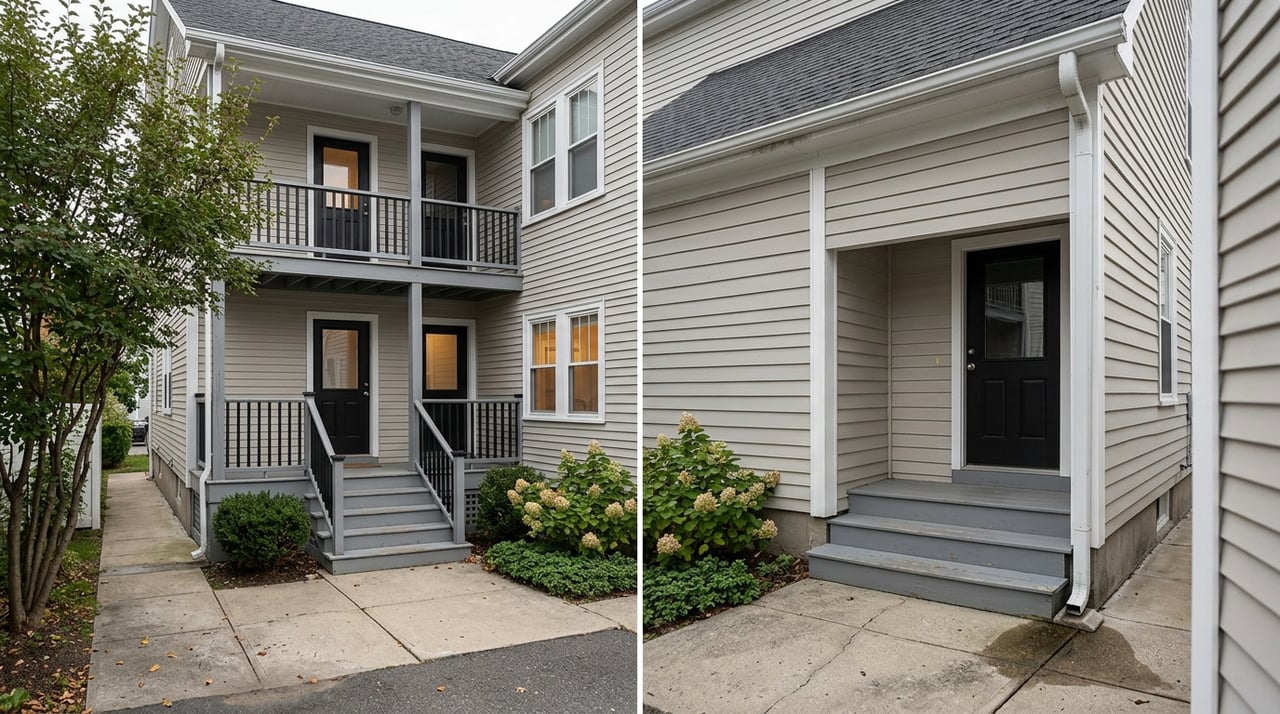
If you want to lower your housing cost while building long-term equity, a two- or three-family home in North Worcester may be one of the most practical ways to do it. House hacking appeals to buyers who want a place to live and a property that can help carry itself, but the numbers only work when you look past the headline and study the details. In 01606, public data gives you a strong starting point for evaluating demand, financing, operating costs, and resale. Let’s dive in.
Why North Worcester fits house hacking
North Worcester is part of a city where multifamily housing is already a normal part of the housing stock, not a rare exception. Worcester’s draft housing needs assessment says two-family homes are allowed by right in 41% of the city and three-family homes in 24%, with the most permissive zoning concentrated in older inner-core areas.
That matters because it helps explain why buying a small multifamily in Worcester can be a realistic owner-occupant strategy. You are not forcing an unusual property type into the market. You are buying into a housing pattern the city already supports in many areas.
The 01606 ZIP code also has the scale to support this kind of demand. ACS 2024 5-year estimates show 22,844 residents, 9,563 housing units, 9,192 households, a median household income of $92,105, and a median owner-occupied housing value of $370,800.
Those figures do not guarantee a good deal, but they do show a stable residential area with meaningful housing demand. The same profile lists a mean travel time to work of 24.9 minutes, which adds context for buyers thinking about daily convenience and future tenant interest.
What the local numbers look like
Worcester Quick Facts lists a median multifamily sale price of $475,000. It also lists a residential property tax rate of $13.28 per $1,000 of assessed value.
For a house hacker, those two numbers matter right away. The sale price shapes your financing options, and the tax rate affects your monthly carrying cost. Water and sewer costs also matter because utility expenses can shift your break-even point faster than many first-time multifamily buyers expect.
This is why house hacking should never be framed as “buy a property and let rent pay for everything.” A better approach is to ask whether rent from the other unit or units can reduce your monthly cost enough to make ownership more manageable while you build equity.
Rent benchmarks to use carefully
Public rent data in Worcester gives you a useful range, not a perfect answer. Worcester Quick Facts lists median rents of $1,450 for a two-bedroom apartment and $1,804 for a three-bedroom apartment.
The city’s affordable housing attachment for the Worcester, MA HUD Metro FMR area lists FY2026 fair market rents, effective October 1, 2025, at $2,056 for a two-bedroom and $2,548 for a three-bedroom. Because these are different benchmarks, it is smart to treat them as a range instead of using them as interchangeable comps.
That creates a more realistic screening method. If your deal only works at the very top of the rent range, you may be cutting things too close. If it still works using more conservative assumptions, your margin of safety is stronger.
Here is the rough annual gross income those rent ranges can suggest before vacancy, maintenance, repairs, taxes, insurance, and other ownership costs:
| Unit type | Monthly range | Rough annual range |
|---|---|---|
| 2-bedroom | $1,450 to $2,056 | $17,400 to $24,672 |
| 3-bedroom | $1,804 to $2,548 | $21,648 to $30,576 |
These are simple arithmetic checks, not full underwriting. They are best used as an early filter before you get deeper into the property’s actual expenses and market position.
Why rent demand matters in Worcester
The city’s landlord and housing-solutions report gives useful context for the rental side of the equation. It says nearly 40% of Worcester County rental housing is located in the City of Worcester, and more than half of county renter households spend over 30% of income on housing.
The same report points to low vacancy and high rents as ongoing challenges for renters. For a buyer considering a well-kept two-family or three-family, that supports the idea that modest multifamily rentals can still attract interest from tenants and future buyers.
That said, demand is not the same as guaranteed performance. Your unit layout, condition, parking, utility setup, and legal status still matter. In Worcester, good house hacking is usually about buying carefully and operating conservatively.
Financing options buyers often compare
One of the biggest myths about house hacking is that you need 20% down. In some cases you may, but not always.
HUD says FHA financing can allow down payments as low as 3.5% on one- to four-unit properties. For three- and four-unit properties, FHA also applies a self-sufficiency test, which makes the underwriting more demanding than it is for a two-family.
Conventional financing can also be an option, but the details vary by program. Fannie Mae’s standard eligibility matrix shows two- to four-unit principal residences at 75% loan-to-value for standard purchase transactions, while HomeReady allows up to 95% LTV for DU-eligible principal residences on two- to four-unit properties, subject to program rules and income limits.
The practical takeaway is simple: financing exists, but the best path depends on unit count, your income, your reserves, and the exact loan program. Before you start making offers, it helps to know which loan bucket you actually fit into.
Can rental income help you qualify?
This is the core reason house hacking works on paper. Fannie Mae says rental income from a two- to four-unit principal residence can be used in qualifying, and Freddie Mac also allows rental income from the other units in a two- to four-unit owner-occupied primary residence to be added to total income for debt-to-income calculations.
In plain English, the lender may count some income from the unit or units you are not living in. That can improve your ability to qualify compared with buying a single-family home on the same budget.
Still, that does not mean every multifamily property will qualify the same way. Appraised market rent, vacancy assumptions, program guidelines, and property condition all affect how the numbers are treated.
Budget for older-building realities
Much of Worcester’s multifamily stock is older, and that can be part of the appeal. It can also mean deferred maintenance, lead-related work, safety repairs, or system updates.
MassHousing offers a Home Improvement Loan Program with fixed-rate loans from $7,500 to $50,000 for owner-occupants of one- to four-family homes. Its Get the Lead Out program offers $30,000 to $45,000 for lead abatement on one- to four-family homes, including owner-occupants and investor-owners renting to income-eligible tenants.
These public programs matter because they show there may be financing support available for important post-closing work. If you are buying a property that needs updates, repair planning should be part of your purchase decision from the start.
What changes with a three-family
A three-family can look more attractive because of the extra rent potential, but it also brings extra complexity. In Worcester, Inspectional Services says periodic inspections apply to multifamily buildings with three or more units.
The owner or agent must be present, common areas are inspected, corrections are documented, and a Certificate of Inspection is issued. That means code compliance, common-area upkeep, and repair records become especially important with a three-family.
There is also a financing difference. FHA underwriting for a three-unit can be more demanding because of the self-sufficiency test, so the extra rent does not automatically make the deal easier.
Due diligence matters more than hype
In North Worcester, a smart house-hack search starts with verification. Worcester Atlas and the city zoning map are the official tools for checking parcel-level zoning, land use, and property records.
That is important because unit count, legal use, and permit history are not always obvious from a listing sheet. A property that looks like a three-family in marketing language may need deeper record review before you rely on that description.
A simple due-diligence checklist can keep you grounded:
- Confirm zoning and parcel details in Worcester Atlas
- Review assessor and tax data
- Compare conservative rent assumptions against principal, interest, taxes, insurance, and reserves
- Check whether a three-family triggers periodic inspection requirements
- Verify which loan program you qualify for before offering
This kind of process protects you from making emotional decisions based on best-case rent projections.
Think about resale on day one
Good house hacking is not just about getting in. It is also about preserving your options when it is time to sell.
In Worcester, the strongest resale story usually combines clear legal use, documented maintenance, and straightforward financing appeal for the next buyer. A property with clean records and realistic numbers can be more marketable to both owner-occupants and investors.
Transportation access also supports long-term appeal. Worcester’s transportation page notes access to I-290, I-190, I-495, Route 146, the Massachusetts Turnpike, WRTA bus service, and Worcester Regional Airport. Practical access points like these can influence both tenant demand and future resale interest.
A realistic way to evaluate a deal
If you are considering house hacking in 01606, the public data supports the strategy, but only when you stay disciplined. Buy with a margin of safety, use conservative rent assumptions, and budget carefully for taxes, utilities, repairs, and code-related work.
That is especially true if you are comparing a two-family with a three-family. The three-family may offer more income potential, but it can also bring tighter underwriting and more operating responsibility.
The goal is not to find a perfect property. The goal is to find one that works for your budget, your tolerance for complexity, and your long-term plan in Worcester.
If you want help evaluating a two- or three-family in North Worcester, working with a local broker who understands multifamily numbers, older housing stock, and Worcester’s public records can make the process much clearer. To talk through your options, connect with Erin Zamarro.
FAQs
What is house hacking with a two-family in North Worcester?
- House hacking with a two-family in North Worcester usually means you live in one unit, rent the other unit, and use that income to help offset your monthly housing costs.
What rent should you use for a Worcester house-hack estimate?
- A conservative starting point is to use Worcester Quick Facts median rent figures and compare them with the higher fair market rent benchmarks as a range, then verify with current local listings and leases.
Can rental income help you qualify for a North Worcester multifamily loan?
- Yes. Fannie Mae and Freddie Mac both allow rental income from non-owner-occupied units in a two- to four-unit owner-occupied property to be part of the underwriting picture.
What is different about buying a three-family in Worcester?
- A three-family can involve more demanding FHA underwriting and may also trigger Worcester periodic inspection requirements for multifamily buildings with three or more units.
What records should you check before buying a multifamily in 01606?
- The most useful public checks are Worcester Atlas for zoning and parcel details, assessor and tax records, inspection history, legal unit count, and a realistic rent estimate against your monthly ownership costs.